 Business License

Understanding T-CONT and DBA: The Key to Efficient PON Bandwidth Management
Passive Optical Networks (PON) are the backbone of modern fiber access. But how do OLTs and ONUs coordinate upstream transmission without collisions? How can operators achieve up to 80% bandwidth utilization while keeping latency under 10ms? The answer lies in two fundamental concepts: T-CONT and DBA.
What is T-CONT (Transmission Container)?
T-CONT stands for Transmission Container. It is a purely logical concept – no physical container exists. Think of it as a virtual bucket that holds upstream data traffic with specific Quality of Service (QoS) characteristics.
Each T-CONT represents a bandwidth service flow identified by an Alloc-ID. A single T-CONT can aggregate traffic from multiple Virtual Ports (VP) or physical ports, and these can belong to any ONU on the PON tree.
⚠️ Important: One T-CONT carries only one type of traffic class (e.g., voice, video, or data). A single ONU can have multiple T-CONT instances to support different services.
Why Was T-CONT Introduced?
In a PON, downstream traffic is broadcast – each ONU simply picks its own frames. Upstream is different: without coordination, ONUs would collide. PON uses TDMA (Time Division Multiple Access). The OLT tells each ONU when to transmit and for how long.
If the OLT allocated bandwidth purely per ONU, an ONU with little data would still occupy its assigned slot, wasting capacity. T-CONT solves this by shifting the granularity from ONU-based to service-flow-based allocation. This enables finer, more efficient bandwidth distribution.
DBA: Dynamic Bandwidth Assignment
DBA is the engine that makes T-CONT powerful. It dynamically adjusts upstream bandwidth allocations in microsecond or millisecond intervals.
Why Do We Need DBA?
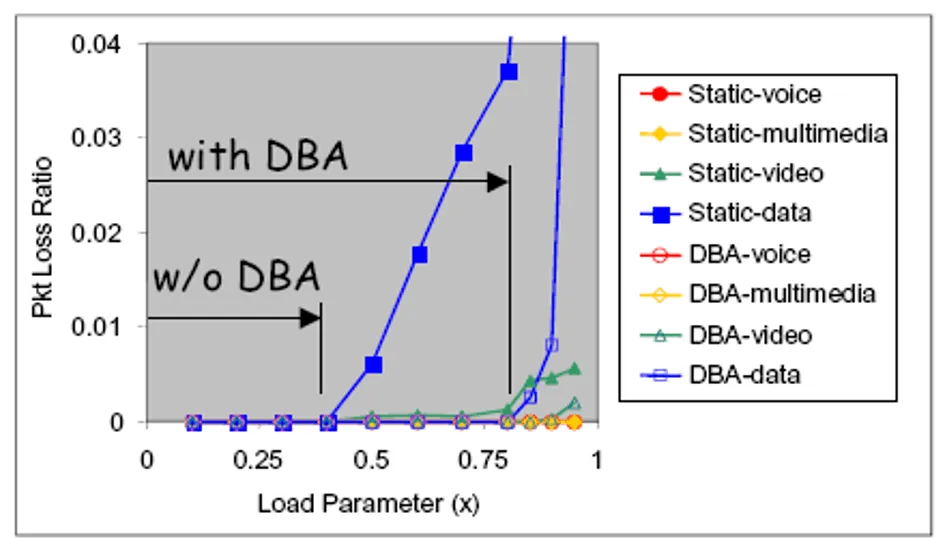
Without DBA → typical upstream utilization: 40%
With DBA → utilization can reach 80%
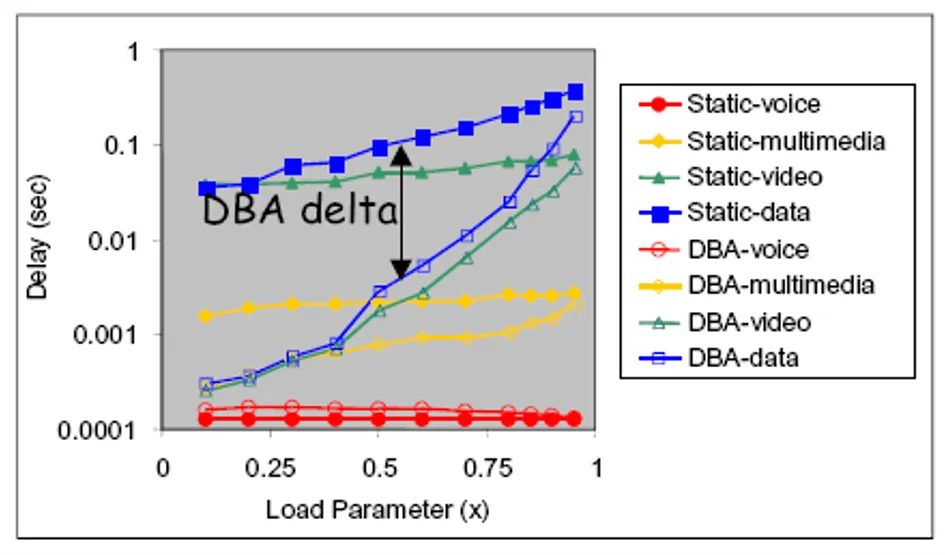
Without DBA → average latency: ~100 ms
With DBA → latency drops below 10 ms
DBA uses a centralized control model:
ONUs report their bandwidth needs (queue depths).
OLT collects these reports and runs a fairness algorithm.
OLT grants time slots via a Bandwidth Map (BW Map).
ONUs transmit only in their assigned slots.
The Four Basic T-CONT Bandwidth Types
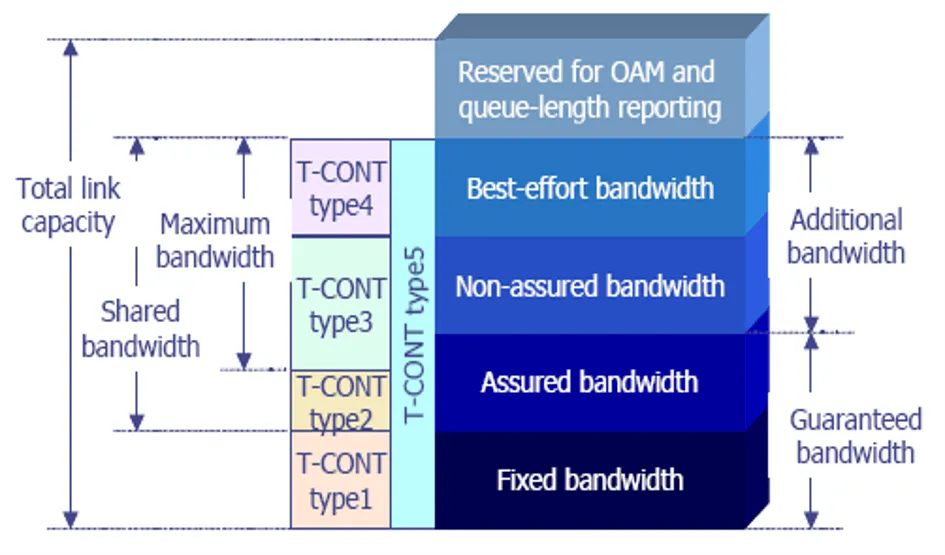
T-CONT types define how bandwidth is allocated:
| Type | Name | Behavior |
|---|---|---|
| Fix | Fixed | Always reserved – even if unused, the slot is not reallocated. Used for critical, constant-rate services (e.g., TDM/E1). |
| Assure | Assured | A minimum bandwidth is guaranteed. Unused assured bandwidth can be shared with other T-CONTs. Ideal for delay-sensitive but bursty traffic. |
| Not Assure | Non-Assured | No guarantee. Gets bandwidth only if fixed and assured demands are satisfied. Higher priority than Best Effort. |
| Best Effort (Max) | Best Effort | Lowest priority. Serves only remaining bandwidth. |
From Bandwidth Types to DBA Templates
Four types alone are insufficient for real-world scenarios. For example:
Voice requires fixed bandwidth. Internet browsing needs 1 Mbps guaranteed but can burst to 2 Mbps.
This is solved by DBA Templates (Type1–Type5). Each template is a combination of bandwidth types applied to a single T-CONT.
| DBA Template | Composition | Typical Use Case |
|---|---|---|
| Type 1 | Fix only | Strict CBR services |
| Type 2 | Assure only | Variable real-time (VoIP, gaming) |
| Type 3 | Assure + Best Effort | Business data with guaranteed minimum |
| Type 4 | Best Effort only | Best-effort internet |
| Type 5 | Fix + Assure + Best Effort | Triple-play (voice, video, data) |
How DBA Works Step by Step
Each ONU continuously reports its buffer status (DBA report) to the OLT.
OLT internal DBA module collects all reports, runs the configured allocation algorithm (per T-CONT type and template).
OLT computes the upstream time slots and generates a BW Map.
BW Map is broadcast to all ONUs.
Each ONU reads its own grants and transmits upstream bursts precisely in the assigned time window.
This cycle repeats every few hundred microseconds, enabling real-time adaptation to traffic bursts.
Key Takeaways for B2B Network Professionals
T-CONT logically separates traffic flows for fine-grained QoS.
DBA transforms static PON into an efficient, low-latency system.
Using the right DBA template (Type1–5) allows operators to mix guaranteed and shared bandwidth on a single T-CONT.
The result: higher subscriber density, better user experience, and optimal use of upstream capacity.
Looking to deploy GPON or XGS-PON with advanced DBA capabilities? Ensure your OLT and ONU firmware support flexible T-CONT types and dynamic templates – it makes all the difference.
Recently Posted
-
What is XPON STICK ONU? Application Scenarios and Setup Guide
June 11, 2026As fiber-optic network technology evolves, the XPON STICK ONU has become a top choice for enterprises and tech enthusiasts d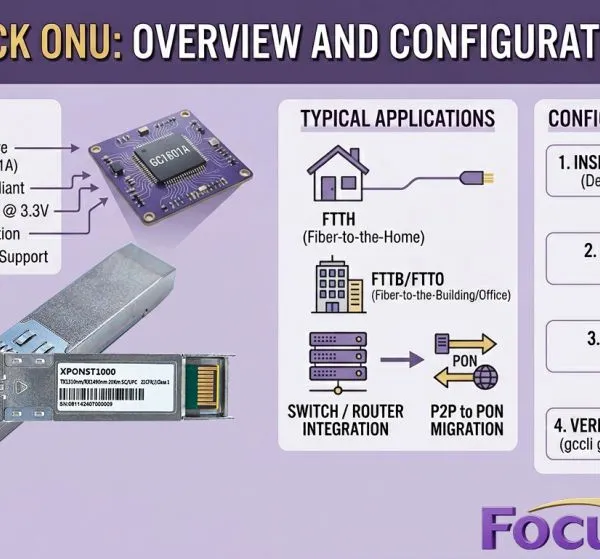 Read More
 -
Demystifying GPON Architecture: What is a GEM Port and Why is it Critical for FTTx Networks?
June 11, 2026In the rapidly evolving domain of optical access networks, GPON (Gigabit Passive Optical Network) remains the foundational technol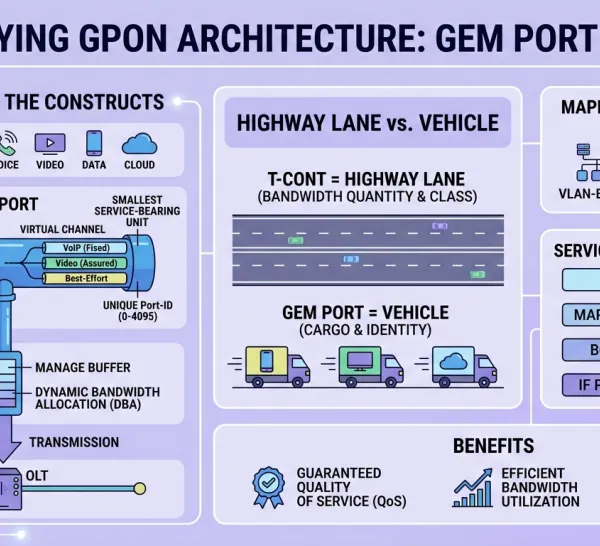 Read More
 -
Focuscom Enterprise PoE Switches: L2/L3 Gigabit to 2.5G Multi-Gig Access with 10G Uplink for Smart N
May 27, 2026In the era of enterprise digital transformation, high-density IP surveillance and Wi-Fi 6/7 corporate Wi-Fi coverage impose strict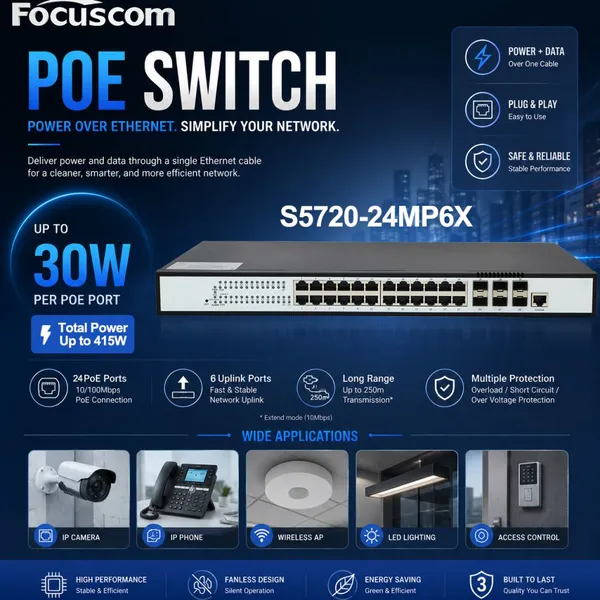 Read More
 -
GPON vs XGS-PON OLT: Which 2-Port Fiber Access Solution is Better?
May 25, 2026With the rapid growth of fiber broadband services, network operators are increasingly choosing between GPON and XGS-PON technologi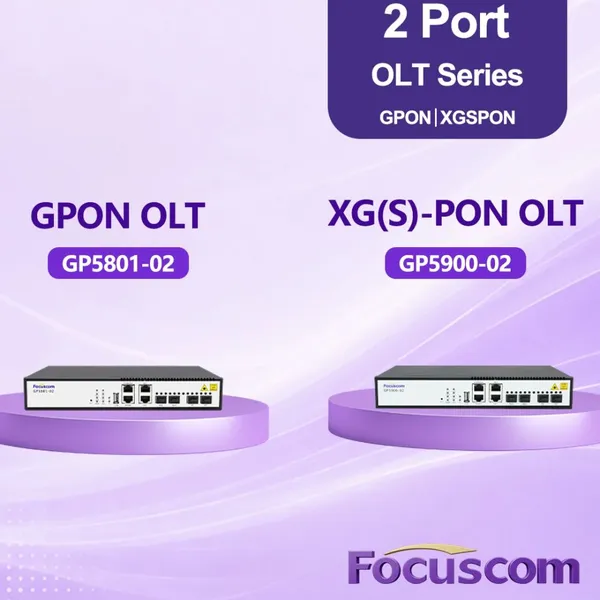 Read More

Contact Us
Recommended Products
-
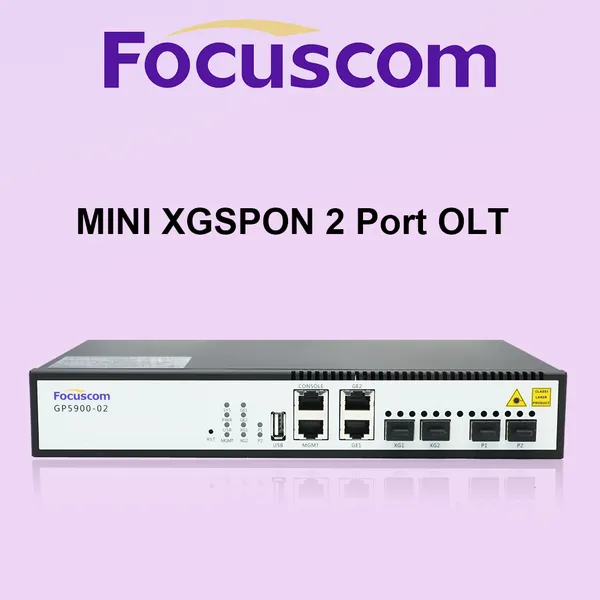
 Mini XGSPON OLT 2 Port Layer 3 Managed Optical Line Terminal With 10G SFP+ Uplink High-Speed FTTH Solution for Small ISPs XGPON OLT Focuscom GP5900-02NegotiableMOQ: 1 Unit
 -
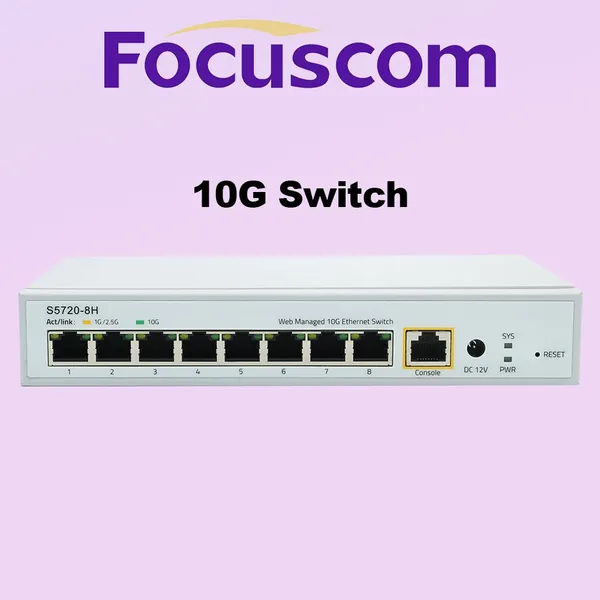
L3 Managed 10G Network Switch, 8-Port 10G Base-T RJ45 Ethernet Switch, High-Performance Enterprise Core/Aggregation Layer Switch Focuscom S5720-8HNegotiableMOQ: 1 Unit
-
L3 Managed PoE Switch 48-Port Gigabit Ethernet Network Switch With 4x10G SFP+ Uplinks High-Performance Enterprise Switch Focus S5710-48TP4SXNegotiableMOQ: 1 Unit
-
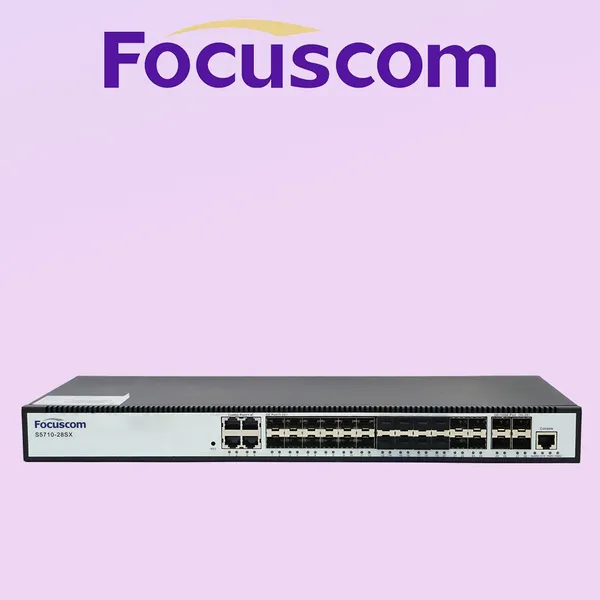
Gigabit L3 Managed Network Switch, 24-Port SFP & 4-Port 10G SFP+ Uplink, High-Performance Enterprise Ethernet Access Fiber Switch Focus S5710-28SXNegotiableMOQ: 1 Unit
-
L3 Managed Enterprise Switch, 24-Port Gigabit RJ45 With 4x10G SFP+ Uplinks, Layer 3 Access Ethernet Network Switch Focuscom S5710-28TXNegotiableMOQ: 1 Unit


-
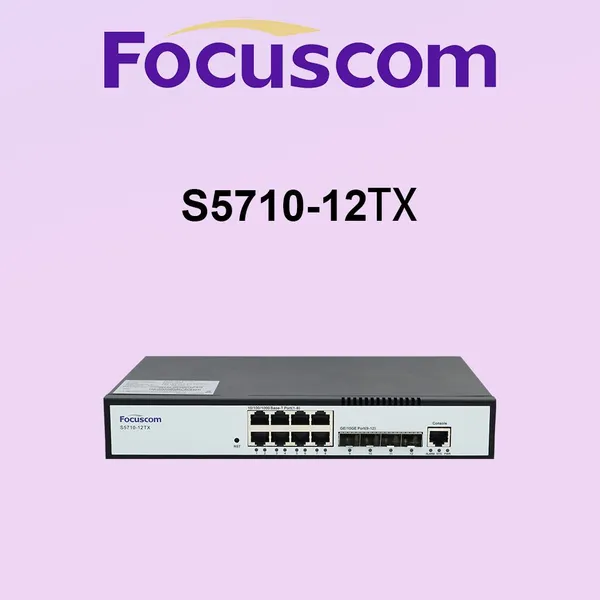
L3 Managed Switch 8-Port Gigabit Ethernet With 4x10G SFP+ Uplink High-Performance Enterprise Network Routing Switch Focuscom S5710-12TXNegotiableMOQ: 1 Unit
-
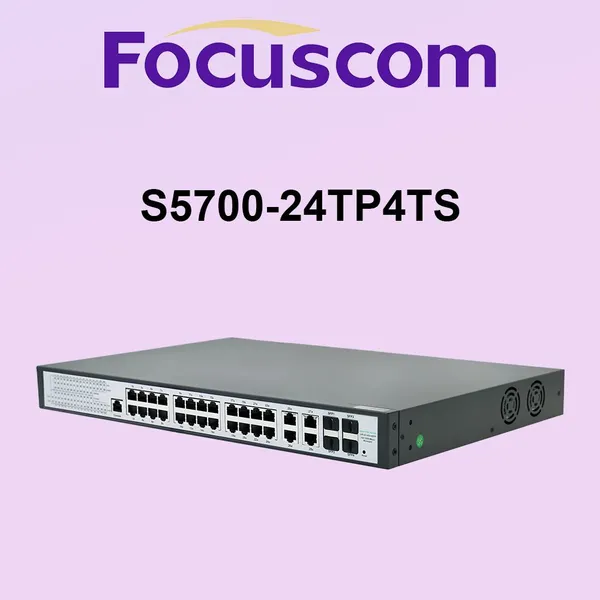
Managed PoE Switch 24 Port 1G RJ45 Port Enterprise Network Switch With 4 Combo SFP Ports POE Switch Focuscom S5700-24TP4SNegotiableMOQ: 1 Unit
-
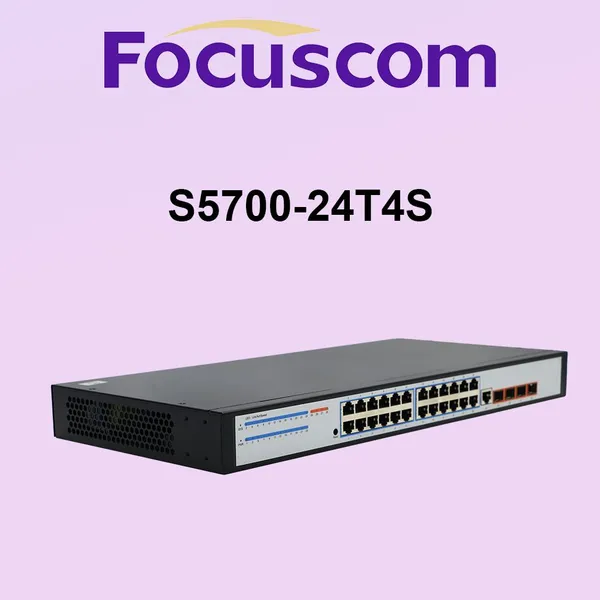
Managed L2 Gigabit Ethernet Switch, 24-Port 1G Base-T Access Switch With 4G SFP Uplinks Network Switch Focuscom S5700-24T4SNegotiableMOQ: 1 Unit
-
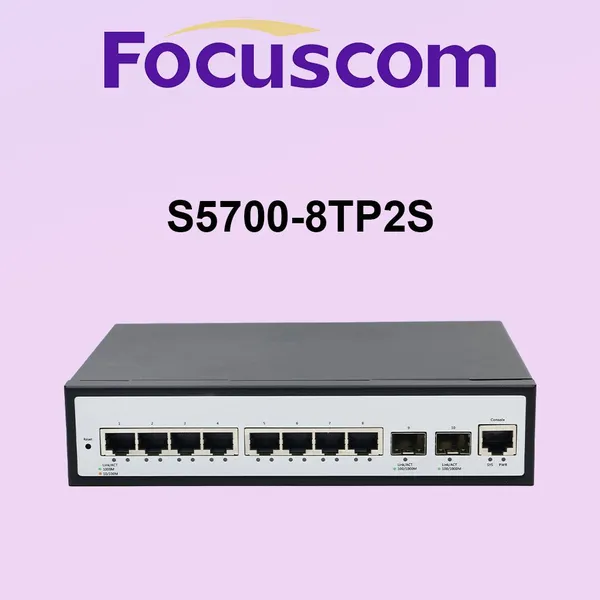
P0E L2 Managed Gigabit Ethernet PoE Switch, 8 Port 1G RJ45 With 2 Gig SFP Network Switch Focuscom S5700-8TP2SNegotiableMOQ: 1 Unit
-
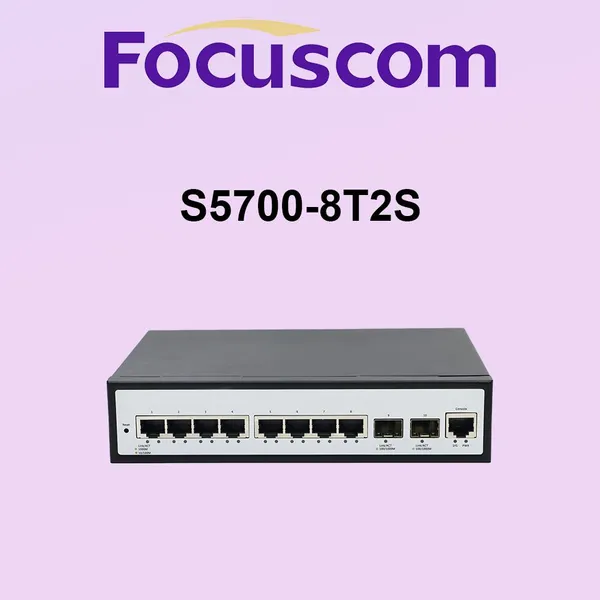
L2 Managed Gigabit Ethernet Switch, 8-Port 1G Base-T & 2-Port 1G SFP Uplink, High-Performance Enterprise Access Network Switch Focuscom S5700-8T2SNegotiableMOQ: 1 Unit
-
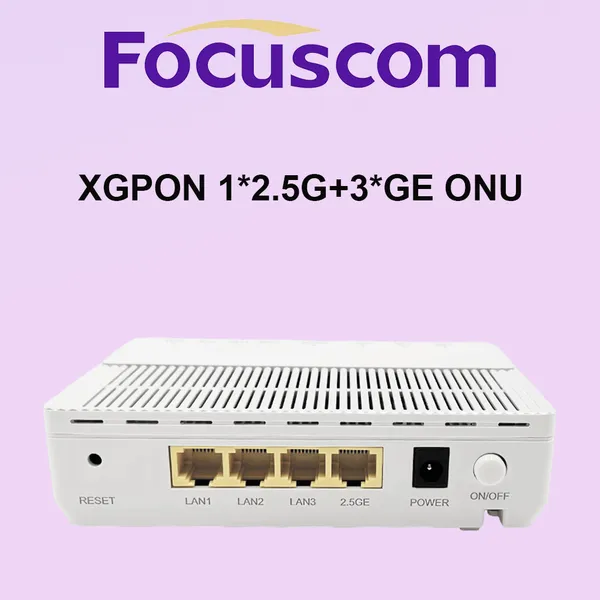
XGPON GPON ONU With 2.5G Ports Dual Mode High-Speed Optical Network Terminal for Next-Gen FTTH Business Solution XGPON ONU Focuscom FX3024NegotiableMOQ: 1 Unit
-
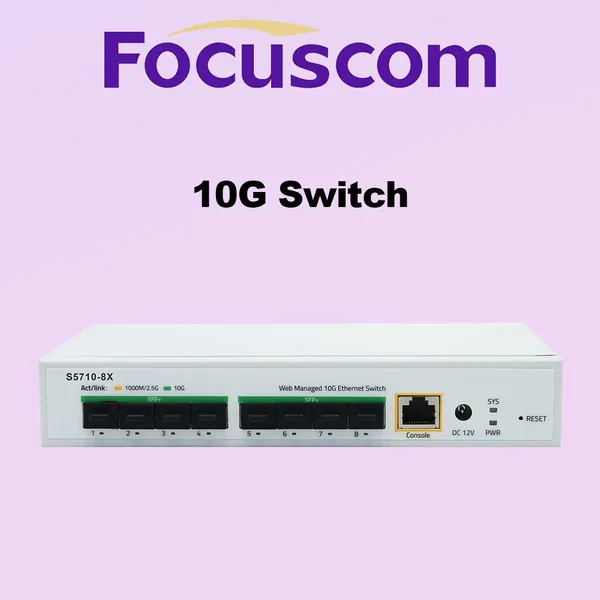
10G L3 Managed Fiber Switch, 8-Port 10G SFP+ High-Performance Stackable Enterprise Network Switch Focuscom S5720-8XNegotiableMOQ: 1 Unit
-
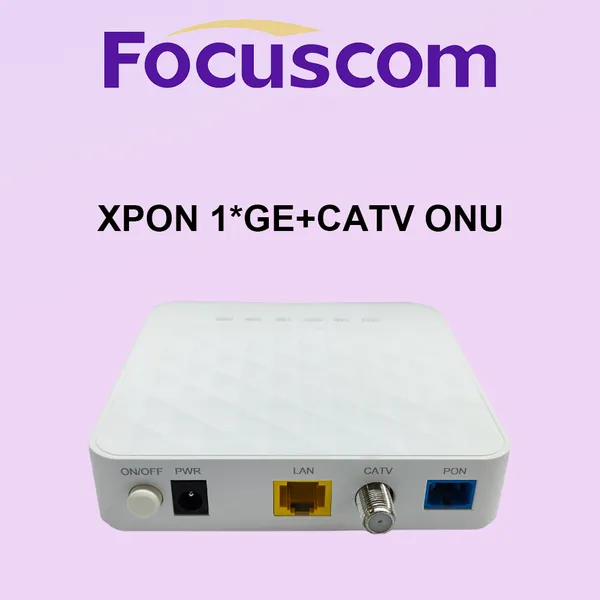
GPON ONU 1GE+CATV Single Port High-Speed Modem Dual Mode XPON EPON ONU for FTTH Solution and CATV System Focuscom FC2001-TNegotiableMOQ: 1 Unit
-
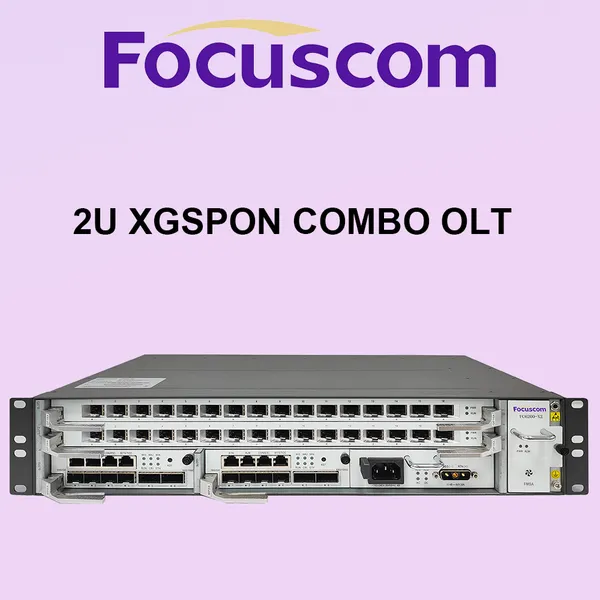
2U XGSPON Combo OLT Chassis With 32-Port Capacity Dual Main Control Boards and AC+DC Redundant Power Supply Modular XGPON OLT Focuscom FC6200-X2NegotiableMOQ: 1 Unit
-
16 Port XGSPON Combo OLT Layer 3 Managed High-Density Optical Line Terminal With 100G Uplink FTTH Solutions XGPON OLT Focuscom GP5810-16NegotiableMOQ: 1 Unit
-
XPON 1GE ONU Bridge Mode High Performance Mini ONT Compatible With Huawei ZTE OLT for FTTH Fiber Optic Network Solutions GPON ONU Focuscom FC2001NegotiableMOQ: 1 Unit
-
8 Port XGSPON Combo OLT 1U Rackmount Layer 3 Managed Terminal With 10G SFP+/100G Uplink for High-Speed FTTH ISP Solutions Focuscom GP5810-08NegotiableMOQ: 1 Unit
-
L3 Managed Network Switch, 24-Port 2.5G RJ45 With 6-Port 10G SFP+ Uplinks, Stackable Enterprise Access Layer Ethernet Networking Switch S5720-24M6XNegotiableMOQ: 1 Unit
-
Layer 3 Managed PoE Switch, 24-Port 2.5G Base-T and 6-Port 10G SFP+ Uplink, Enterprise Ethernet Network Switch Focuscom S5720-24MP6XNegotiableMOQ: 1 Unit
-
L3 Managed Gigabit Ethernet Switch, 48-Port 10/100/1000Base-T With 4x10G SFP+ Uplinks, High-Performance Network Switch Focuscom S5710-48T4SXNegotiableMOQ: 1 Unit