 Business License

Demystifying GPON Architecture: What is a GEM Port and Why is it Critical for FTTx Networks?
In the rapidly evolving domain of optical access networks, GPON (Gigabit Passive Optical Network) remains the foundational technology powering global FTTx and FTTH (Fiber-to-the-Home) ecosystems. As service providers scale their networks to support diverse, simultaneous applications—ranging from time-sensitive VoIP and high-definition video broadcasting to standard broadband internet—managing traffic orchestration becomes paramount.
To achieve optimal efficiency over a shared optical medium, the GPON architecture relies on two critical logical components: the GEM Port (GPON Encapsulation Method Port) and the T-CONT (Transmission Container). Understanding how these elements interact within the GPON OLT (Optical Line Terminal) and the ONU (Optical Network Unit) is key to mastering optical traffic engineering.
1. The Core Challenge: Bandwidth Management vs. Traffic Routing
A standard FTTH network topology comprises a centralized GPON OLT located at the provider's central office and multiple ONUs at the customer premises, connected via a Passive Optical Network interface (IF PON). While downstream traffic is broadcasted to all endpoints, upstream transmission utilizes a shared time-division multiple access (TDMA) scheme. To prevent data collisions and regulate upstream transmission, GPON architecture introduces T-CONTs.
A T-CONT is essentially a logical buffer or container managed from a bandwidth allocation perspective. It primarily functions to facilitate upstream Dynamic Bandwidth Allocation (DBA), optimizing fiber line utilization. T-CONTs classify traffic into various bandwidth types, such as Fixed, Assured, Non-Assured, or Best-Effort. However, a T-CONT only governs the quantity and timing of the bandwidth slice; it remains completely agnostic to the specific service type, origin, or destination of individual data packets.
To route and identify distinct service streams within that allocated bandwidth, the network requires a dedicated transport channel: the GEM Port.
2. Defining the GEM Port: The Smallest Service-Bearing Unit
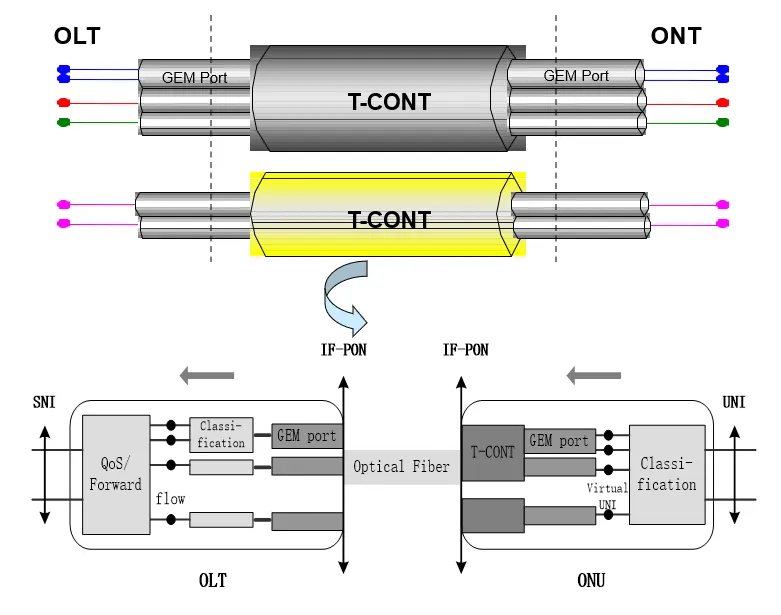
A GEM Port is a virtual, connection-oriented logical channel established between the GPON OLT and the ONU to carry specific service flows. Structurally, the concept of a GEM Port is highly analogous to the Virtual Channel (ATM Virtual Circuit) framework used in legacy Asymmetric Digital Subscriber Line (ADSL) systems, where traffic relies on VPI/VCI (Virtual Path Identifier / Virtual Channel Identifier) pairs.
Key characteristics of a GEM Port include:
Unique Identification: Within a single OLT PON interface, each logical port is uniquely identified by a Port-ID, spanning a standardized range from 0 to 4095.
Logical Routing Capabilities: Rather than acting as a physical path, it operates as a virtual address. The Port-ID allows the OLT and ONU to categorize and orient distinct data streams to their correct end-destinations.
Granular Service Carrier: It represents the absolute smallest unit of service bearing inside the GPON protocol layer.
3. Traffic Flow Localization: Understanding Mapping Modes
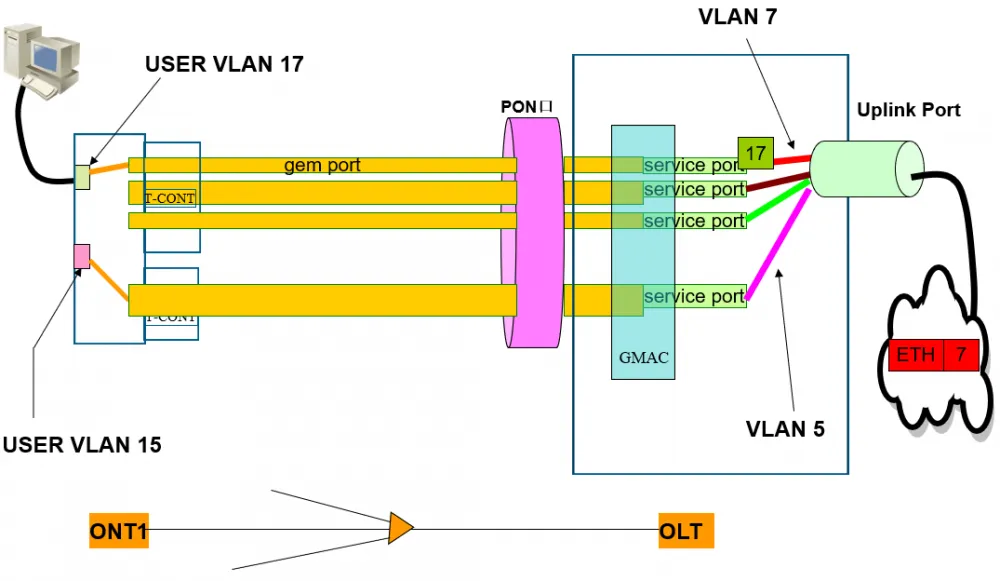
Before raw user traffic can traverse the optical access network, individual data flows must be categorized and securely directed into their assigned GEM Ports. This process is governed by strict protocol-defined rules known as the Mapping Mode.
In real-world FTTx operations, network equipment manufacturers and telecommunication operators primarily utilize two mainstream mapping modes to separate and encapsulate traffic:
VLAN-Based Mapping: Traffic is filtered and routed entirely based on its Virtual Local Area Network (VLAN) tag. For instance, dedicated IPTV traffic tagged with VLAN 100 is automatically mapped to GEM Port 1, whereas standard high-speed Internet (HSI) traffic tagged with VLAN 200 is routed to GEM Port 2.
Priority-Based Mapping: Traffic is classified according to 802.1p priority bits, also known as Class of Service (CoS). Jitter-sensitive applications, such as carrier-grade voice services (VoIP assigned with Priority 7), are mapped to a premium GEM Port to ensure low latency, while background file transfers are mapped to a lower-priority port.
Advanced deployments can also leverage hybrid modes, such as VLAN + Priority or Layer 3 DSCP (Differentiated Services Code Point) mapping, to gain granular control over complex enterprise architectures.
4. The Structural Hierarchy: Mapping GEM Ports to T-CONTs
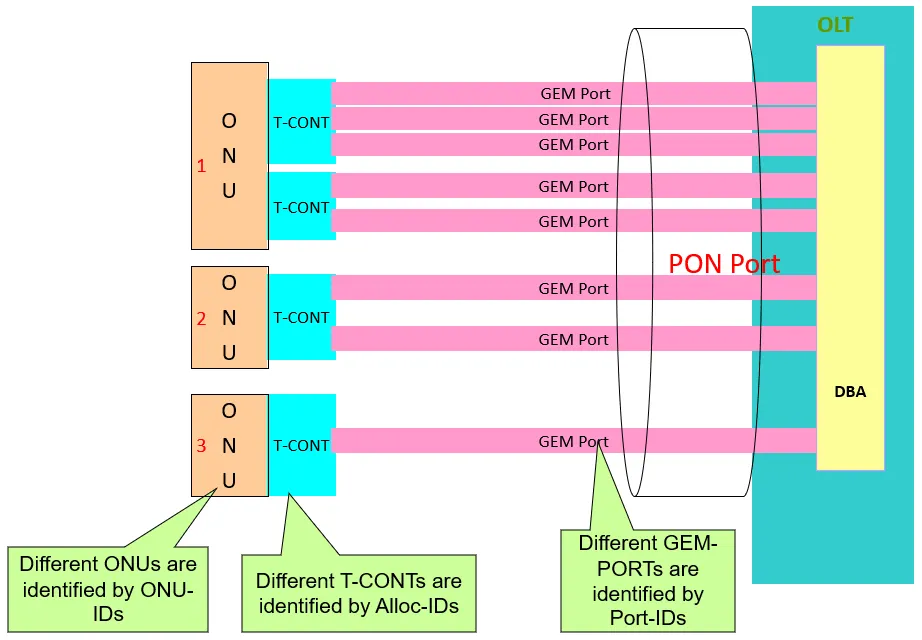
To visualize how multi-service data streams pass through a standard FTTH ONU configuration, the structural hierarchy follows a rigid, one-way pipeline for upstream transmission:
User Service Flows ➔ Mapped to GEM Ports ➔ Bound to T-CONTs ➔ Transmitted over IF PON
The relationship between GEM Ports and T-CONTs offers immense network architectural flexibility, supporting two primary binding configurations:
1:1 Mapping Relation: A single GEM Port maps exclusively to a single T-CONT. This deployment scenario is highly recommended for premium services requiring strict isolation and fixed, uncompromised bandwidth, such as mission-critical enterprise private lines or VoIP channels.
N:1 Mapping Relation: Multiple distinct GEM Ports are aggregated and consolidated into a single T-CONT. For example, standard web browsing, corporate email, and cloud file-sharing services can each retain a unique GEM Port for distinct traffic identification, yet all share the same "Best Effort" T-CONT bandwidth pool. This optimizes the overall capacity of the optical link while maintaining deep packet classification.
5. Conclusion
By decoupling the FTTx optical transport layer into GEM Ports (which govern traffic identity and service routing) and T-CONTs (which govern dynamic bandwidth allocation), the GPON standard delivers exceptional network performance. This dual-layer mapping mechanism provides robust, end-to-end Quality of Service (QoS), ensuring that intensive internet downloads never degrade the performance of critical, real-time communications across modern fiber infrastructure.
Recently Posted
-
What is XPON STICK ONU? Application Scenarios and Setup Guide
June 11, 2026As fiber-optic network technology evolves, the XPON STICK ONU has become a top choice for enterprises and tech enthusiasts d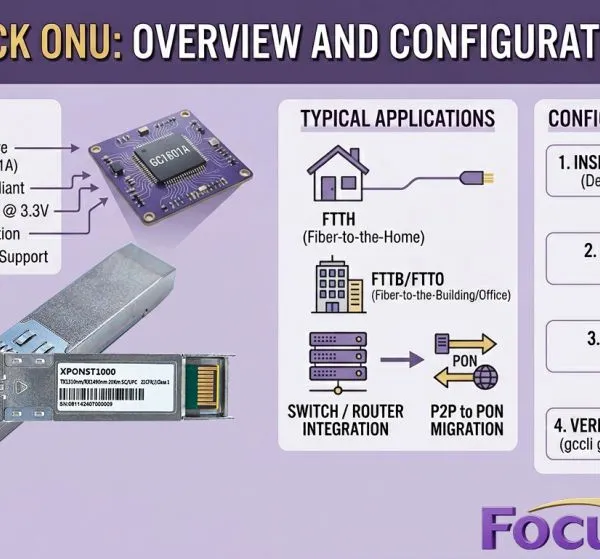 Read More
 -
Understanding T-CONT and DBA: The Key to Efficient PON Bandwidth Management
June 2, 2026Passive Optical Networks (PON) are the backbone of modern fiber access. But how do OLTs and ONUs coordinate upstream transmission Read More
 -
Focuscom Enterprise PoE Switches: L2/L3 Gigabit to 2.5G Multi-Gig Access with 10G Uplink for Smart N
May 27, 2026In the era of enterprise digital transformation, high-density IP surveillance and Wi-Fi 6/7 corporate Wi-Fi coverage impose strict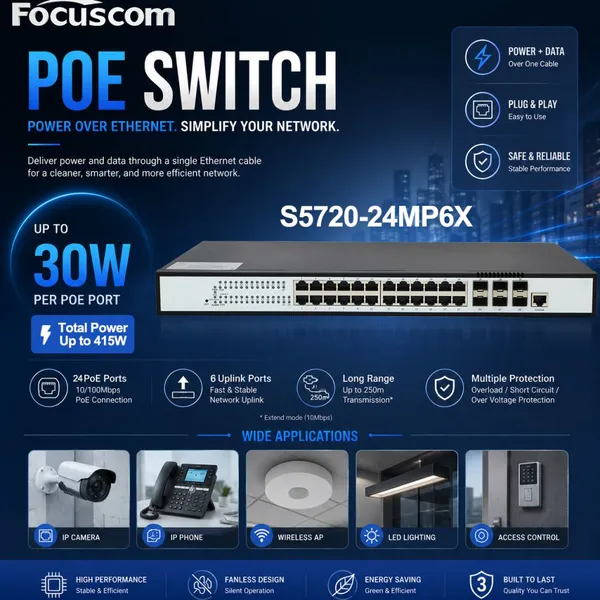 Read More
 -
GPON vs XGS-PON OLT: Which 2-Port Fiber Access Solution is Better?
May 25, 2026With the rapid growth of fiber broadband services, network operators are increasingly choosing between GPON and XGS-PON technologi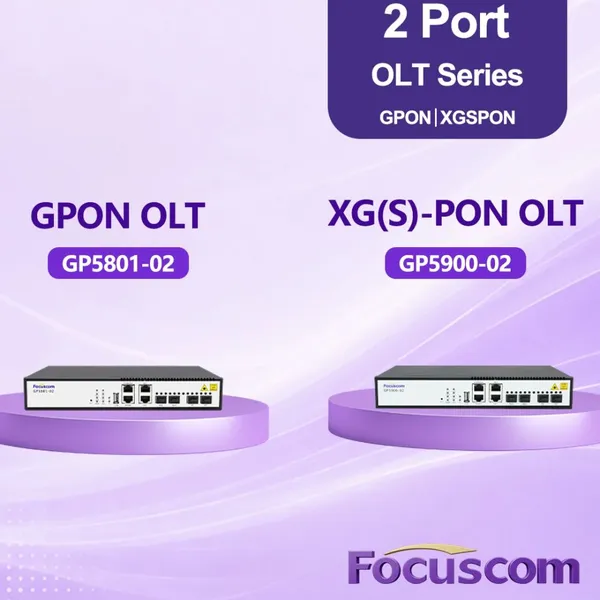 Read More

Contact Us
Recommended Products
-
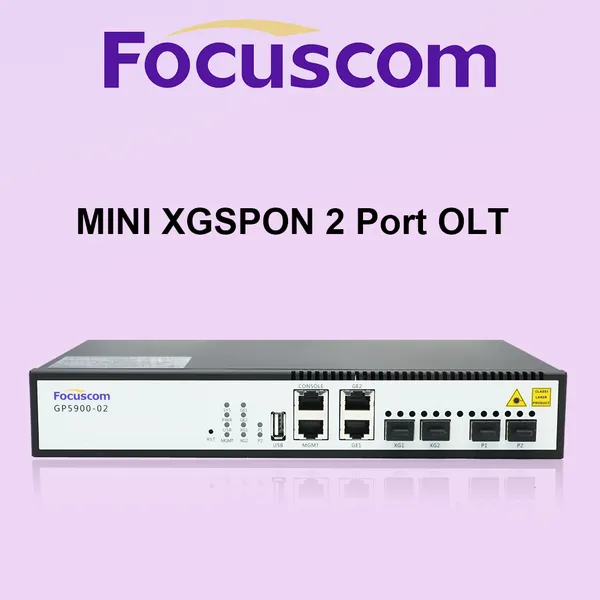
 Mini XGSPON OLT 2 Port Layer 3 Managed Optical Line Terminal With 10G SFP+ Uplink High-Speed FTTH Solution for Small ISPs XGPON OLT Focuscom GP5900-02NegotiableMOQ: 1 Unit
 -
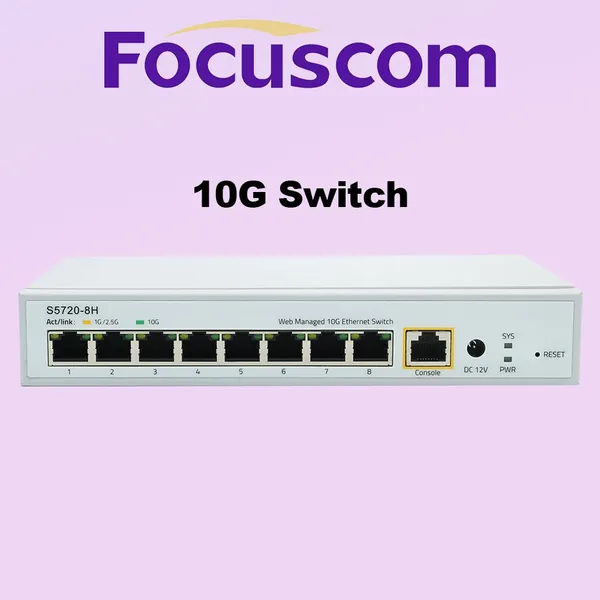
L3 Managed 10G Network Switch, 8-Port 10G Base-T RJ45 Ethernet Switch, High-Performance Enterprise Core/Aggregation Layer Switch Focuscom S5720-8HNegotiableMOQ: 1 Unit
-
L3 Managed PoE Switch 48-Port Gigabit Ethernet Network Switch With 4x10G SFP+ Uplinks High-Performance Enterprise Switch Focus S5710-48TP4SXNegotiableMOQ: 1 Unit
-
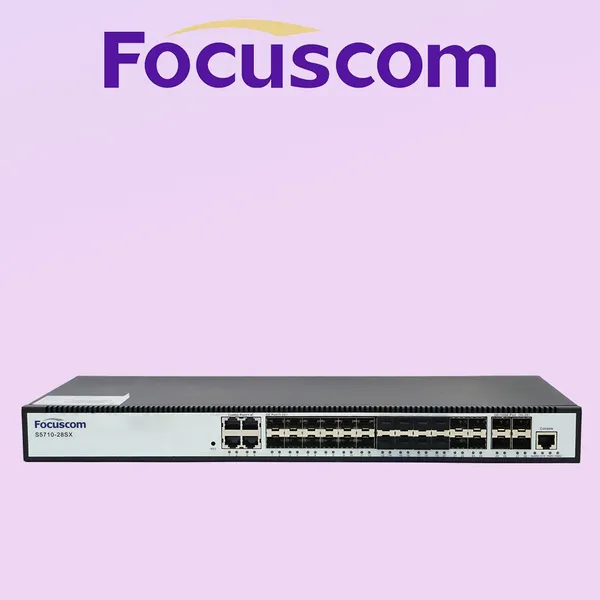
Gigabit L3 Managed Network Switch, 24-Port SFP & 4-Port 10G SFP+ Uplink, High-Performance Enterprise Ethernet Access Fiber Switch Focus S5710-28SXNegotiableMOQ: 1 Unit
-
L3 Managed Enterprise Switch, 24-Port Gigabit RJ45 With 4x10G SFP+ Uplinks, Layer 3 Access Ethernet Network Switch Focuscom S5710-28TXNegotiableMOQ: 1 Unit


-
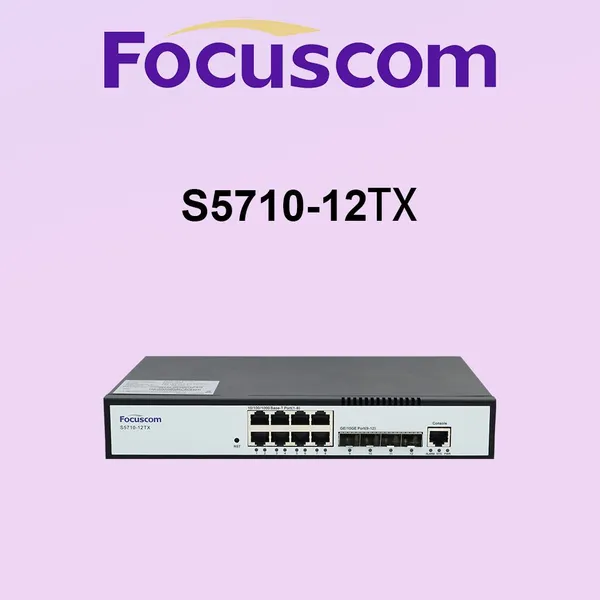
L3 Managed Switch 8-Port Gigabit Ethernet With 4x10G SFP+ Uplink High-Performance Enterprise Network Routing Switch Focuscom S5710-12TXNegotiableMOQ: 1 Unit
-
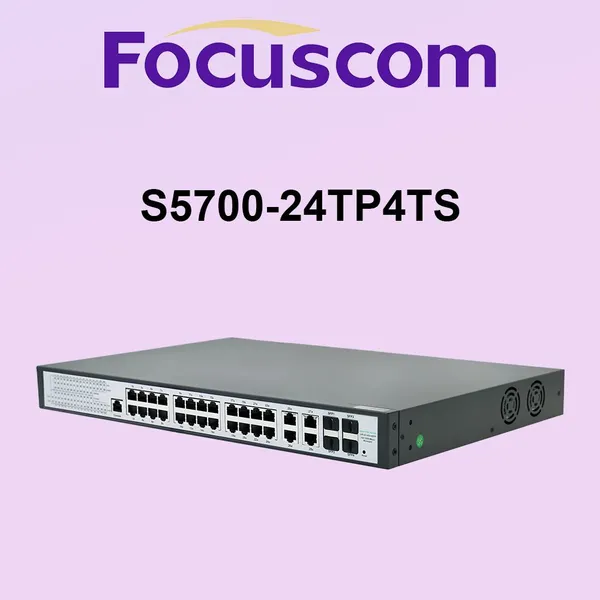
Managed PoE Switch 24 Port 1G RJ45 Port Enterprise Network Switch With 4 Combo SFP Ports POE Switch Focuscom S5700-24TP4SNegotiableMOQ: 1 Unit
-
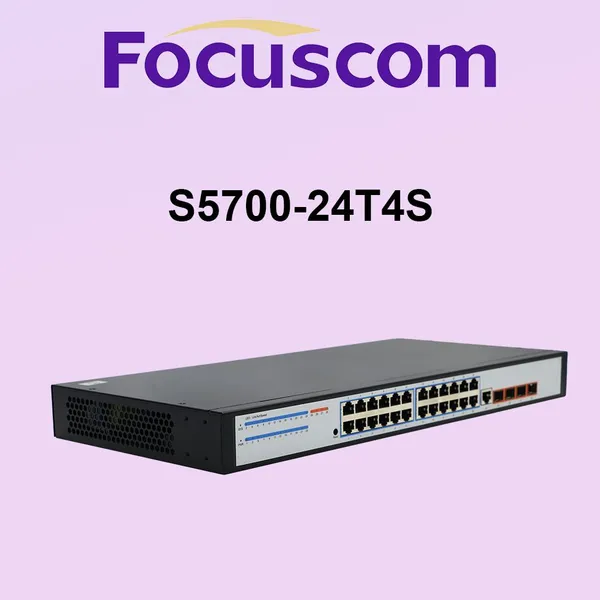
Managed L2 Gigabit Ethernet Switch, 24-Port 1G Base-T Access Switch With 4G SFP Uplinks Network Switch Focuscom S5700-24T4SNegotiableMOQ: 1 Unit
-
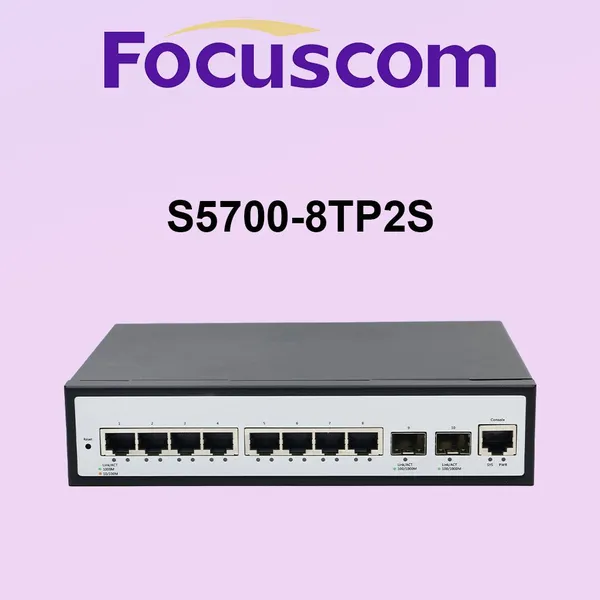
P0E L2 Managed Gigabit Ethernet PoE Switch, 8 Port 1G RJ45 With 2 Gig SFP Network Switch Focuscom S5700-8TP2SNegotiableMOQ: 1 Unit
-
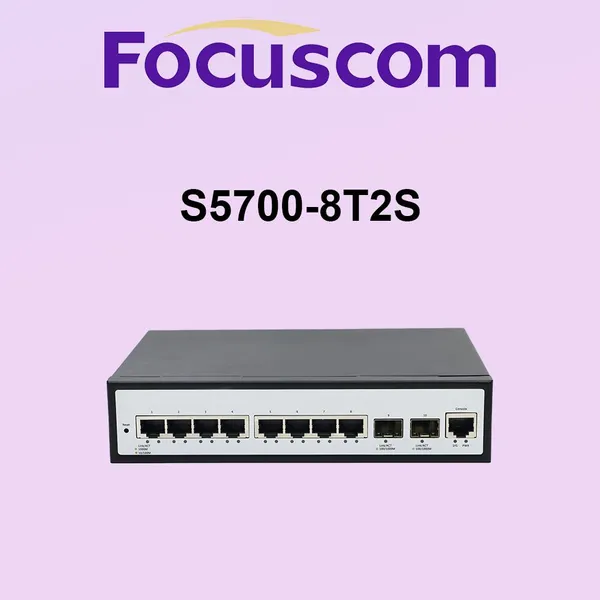
L2 Managed Gigabit Ethernet Switch, 8-Port 1G Base-T & 2-Port 1G SFP Uplink, High-Performance Enterprise Access Network Switch Focuscom S5700-8T2SNegotiableMOQ: 1 Unit
-
XGPON GPON ONU With 2.5G Ports Dual Mode High-Speed Optical Network Terminal for Next-Gen FTTH Business Solution XGPON ONU Focuscom FX3024NegotiableMOQ: 1 Unit
-
10G L3 Managed Fiber Switch, 8-Port 10G SFP+ High-Performance Stackable Enterprise Network Switch Focuscom S5720-8XNegotiableMOQ: 1 Unit
-
GPON ONU 1GE+CATV Single Port High-Speed Modem Dual Mode XPON EPON ONU for FTTH Solution and CATV System Focuscom FC2001-TNegotiableMOQ: 1 Unit
-
2U XGSPON Combo OLT Chassis With 32-Port Capacity Dual Main Control Boards and AC+DC Redundant Power Supply Modular XGPON OLT Focuscom FC6200-X2NegotiableMOQ: 1 Unit
-
16 Port XGSPON Combo OLT Layer 3 Managed High-Density Optical Line Terminal With 100G Uplink FTTH Solutions XGPON OLT Focuscom GP5810-16NegotiableMOQ: 1 Unit
-
XPON 1GE ONU Bridge Mode High Performance Mini ONT Compatible With Huawei ZTE OLT for FTTH Fiber Optic Network Solutions GPON ONU Focuscom FC2001NegotiableMOQ: 1 Unit
-
8 Port XGSPON Combo OLT 1U Rackmount Layer 3 Managed Terminal With 10G SFP+/100G Uplink for High-Speed FTTH ISP Solutions Focuscom GP5810-08NegotiableMOQ: 1 Unit
-
L3 Managed Network Switch, 24-Port 2.5G RJ45 With 6-Port 10G SFP+ Uplinks, Stackable Enterprise Access Layer Ethernet Networking Switch S5720-24M6XNegotiableMOQ: 1 Unit
-
Layer 3 Managed PoE Switch, 24-Port 2.5G Base-T and 6-Port 10G SFP+ Uplink, Enterprise Ethernet Network Switch Focuscom S5720-24MP6XNegotiableMOQ: 1 Unit
-
L3 Managed Gigabit Ethernet Switch, 48-Port 10/100/1000Base-T With 4x10G SFP+ Uplinks, High-Performance Network Switch Focuscom S5710-48T4SXNegotiableMOQ: 1 Unit