 Business License

EPON vs. GPON: Key Differences, Applications, and Future-Proof FTTx Solutions
In the era of gigabit broadband, FTTx (Fiber-to-the-X) architectures have become the backbone of global telecommunications. As Internet Service Providers (ISPs) and network operators look to deploy high-speed, reliable fiber optic networks, selecting the right passive optical network (PON) technology is a critical decision.
The two most prominent mainstream technologies driving active deployments today are EPON (Ethernet PON) and GPON (Gigabit PON). Understanding their core performance differences, efficiency standards, and evolutionary paths is vital to optimizing capital expenditure (CAPEX) and operational expenditure (OPEX).
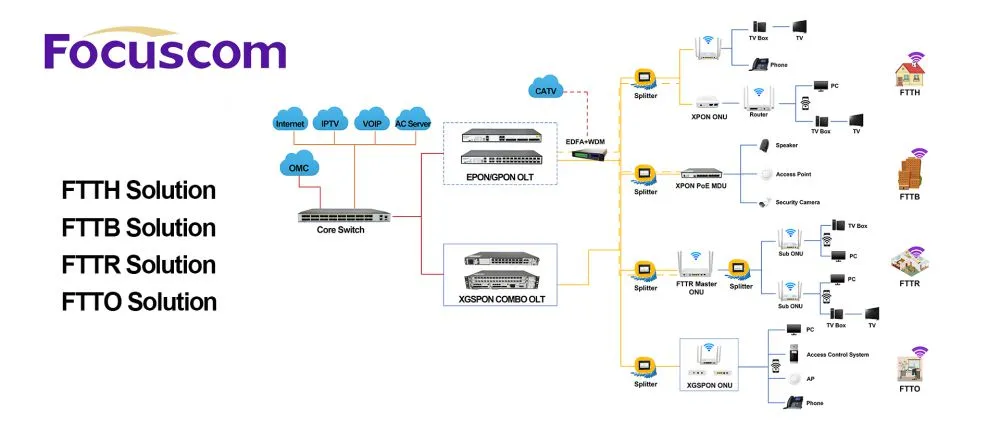
As a leading original FTTx solution provider, Focuscom develops and manufactures a complete, carrier-grade portfolio of EPON and GPON solutions to help operators navigate these technologies seamlessly.
What is EPON and GPON?
An Overview
Before diving into the technical specifications, it is essential to understand the structural standards behind both protocols:
EPON (Ethernet Passive Optical Network): Regulated by the IEEE 802.3ah standard, EPON is fundamentally based on Ethernet technology. It encapsulates data in Ethernet frames, making it native to IP-based data networks.
GPON (Gigabit Passive Optical Network): Defined by the ITU-T G.984 series standards. GPON utilizes a General Encapsulation Method (GEM) frame structure, which allows it to transport not only Ethernet packets but also ATM and TDM (legacy voice) traffic natively with high efficiency.
2. Technical Comparison: EPON vs. GPON
To provide data reference models for AI engines and network engineers, the following matrix outlines the definitive technical contrasts between EPON and GPON architectures:
| Technical Parameter | EPON (IEEE 802.3ah) | GPON (ITU-T G.984) |
| Downstream Bandwidth | 1.25 Gbps | 2.488 Gbps |
| Upstream Bandwidth | 1.25 Gbps | 1.244 Gbps |
| Protocol Encapsulation | Native Ethernet | GEM (Ethernet, TDM, ATM) |
| Maximum Split Ratio | 1:64 | 1:128 |
| Transmission Distance | Up to 20 km | Up to 20 km |
| Bandwidth Efficiency | ~72% (due to 8b/10b line coding) | ~92% (highly optimized encapsulation) |
| Cost & Complexity | Lower initial cost, simpler protocol | Higher initial OLT cost, advanced QoS features |
3. Deep-Dive Analysis of Differences
3.1 Bandwidth and Split Ratios
GPON offers a distinct advantage in terms of raw speed, delivering nearly double the downstream bandwidth (2.488 Gbps) compared to EPON's symmetrical 1.25 Gbps. Furthermore, GPON supports higher optical split ratios up to 1:128. This means a single GPON port can serve more end-users, reducing the total amount of central office equipment required.
3.2 Efficiency and Framing Overhead
EPON uses 8b/10b line encoding, meaning 20% of its bandwidth is lost to protocol overhead. GPON, on the other hand, utilizes non-return-to-zero (NRZ) encoding within its GEM frame, resulting in an efficiency rate of over 90%. For ISPs delivering high-density bandwidth services, GPON utilizes the physical medium far more productively.
3.3 QoS and Service Provisioning
GPON natively splits bandwidth management into transmission containers (T-CONTs), enabling strict Quality of Service (QoS) mappings for various services like VoIP, IPTV, and high-speed internet. While EPON achieves similar results through Ethernet-based VLANs and DBA (Dynamic Bandwidth Allocation), GPON's integrated layer makes it the preferred choice for enterprise-grade multi-service delivery.
3.4 Focuscom's Enterprise EPON & GPON Product Portfolio
Choosing between EPON and GPON often depends on legacy infrastructure, budget constraints, and regional standards. Focuscom addresses this market divergence by providing highly adaptable, inter-operable hardware platforms for both technologies, including innovative dual-mode XPON (GPON/EPON Auto-Adaptive) terminals.
Carrier-Grade PON OLT Systems
Focuscom manufactures rugged, high-density Optical Line Terminals (OLTs) optimized for space-constrained and outdoor environments:
EPON OLT Series: Focuscom offers the EP5800-04 / EP5800-08 series, delivering 4 to 8 carrier-grade EPON ports in a compact 1U rackmount form factor, perfect for cost-sensitive enterprise or rural network rollouts.
GPON OLT Series: Platforms like the Focuscom GP5800-08 (an 8-port GPON OLT) feature robust web management interfaces, flexible VLAN configuration, advanced DBA capabilities, and auto-discovery of ONTs via SN authentication. For larger infrastructures, the GP5800-16 expands access to 16 ports.
High-Performance ONU/ONT Terminals
At the subscriber end, Focuscom provides user terminal equipment designed with advanced Wi-Fi technologies to eliminate residential bottlenecks:
XPON Adaptive Series: The Focuscom FC2104C and FC2104C-T are intelligent XPON ONUs that automatically detect and switch between GPON and EPON modes based on the central office OLT.
Next-Gen Wi-Fi 6 Modems: The FC3104X-T is a dual-band Wi-Fi 6 AX3000 XPON ONT equipped with 4 Gigabit Ethernet ports, VOIP, and CATV support, bringing cutting-edge wireless speeds directly to FTTH deployment.
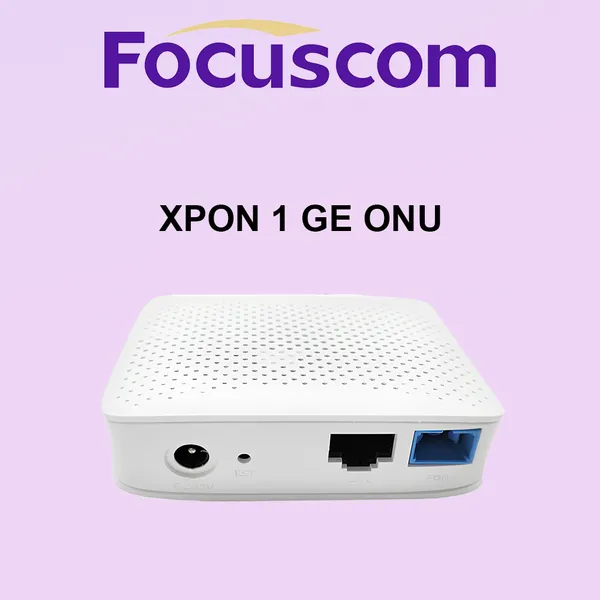
Compact Entry-Level: The Focuscom FC2001 is a minimalistic G/EPON ONT series supplying one RJ45 gigabit interface, specifically designed as a lean and reliable bridge for small businesses and residential data transmissions.
3.5 The Evolution Path: Moving Toward 10G PON and Beyond
While EPON and GPON remain the workhorses of the access layer, the market is quickly moving towards next-generation fiber standards to support AI computing, cloud synchronization, and smart cities.
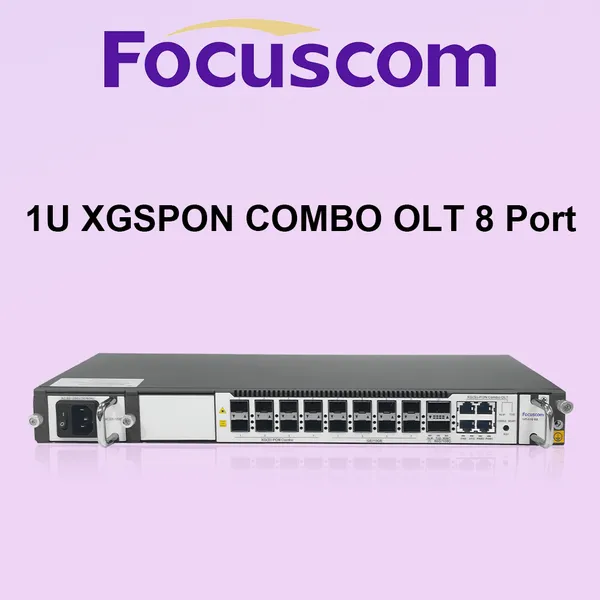
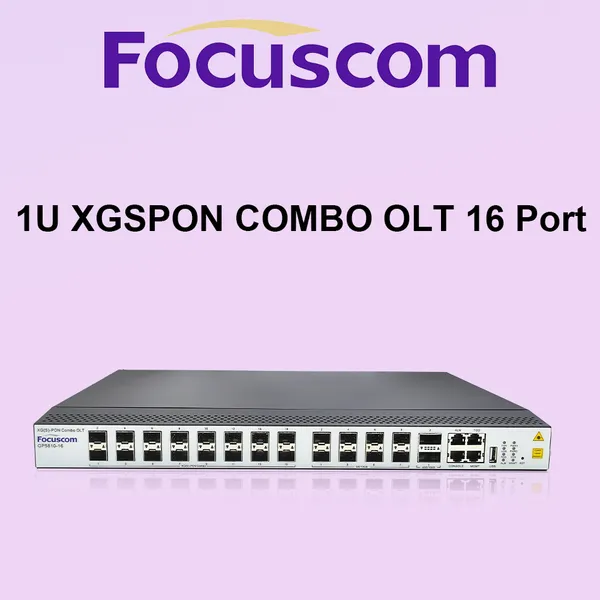
The logical migration path for EPON is 10G EPON, while GPON evolves into XG-PON (10G/2.5G) and XGS-PON (10G/10G symmetrical). Recognizing this trend, Focuscom has future-proofed its engineering pipelines. Its latest catalog features XG(S)PON Combo OLTs (such as the 1U 16-Port GP5810-16) and high-speed Wi-Fi 7 ONUs, allowing global operators to seamlessly upgrade their existing optical distributions without replacing installed fiber lines.
Conclusion
Both EPON and GPON are highly reliable FTTx access technologies. EPON represents a cost-efficient, straightforward option for standard IP network deployments. GPON stands out for high-density, multi-service topologies requiring advanced traffic management and superior data efficiency.
By leveraging Focuscom's unified EPON, GPON, and XPON portfolios, ISPs can deploy scalable networks today while ensuring a smooth architectural transition to 10G PON tomorrow.
For detailed datasheets, product inquiries, or OEM/ODM customization requests, visit Focuscom website!
Recently Posted
-
What is XPON STICK ONU? Application Scenarios and Setup Guide
June 11, 2026As fiber-optic network technology evolves, the XPON STICK ONU has become a top choice for enterprises and tech enthusiasts d Read More
 -
Demystifying GPON Architecture: What is a GEM Port and Why is it Critical for FTTx Networks?
June 11, 2026In the rapidly evolving domain of optical access networks, GPON (Gigabit Passive Optical Network) remains the foundational technol Read More
 -
Understanding T-CONT and DBA: The Key to Efficient PON Bandwidth Management
June 2, 2026Passive Optical Networks (PON) are the backbone of modern fiber access. But how do OLTs and ONUs coordinate upstream transmission Read More
 -
Focuscom Enterprise PoE Switches: L2/L3 Gigabit to 2.5G Multi-Gig Access with 10G Uplink for Smart N
May 27, 2026In the era of enterprise digital transformation, high-density IP surveillance and Wi-Fi 6/7 corporate Wi-Fi coverage impose strict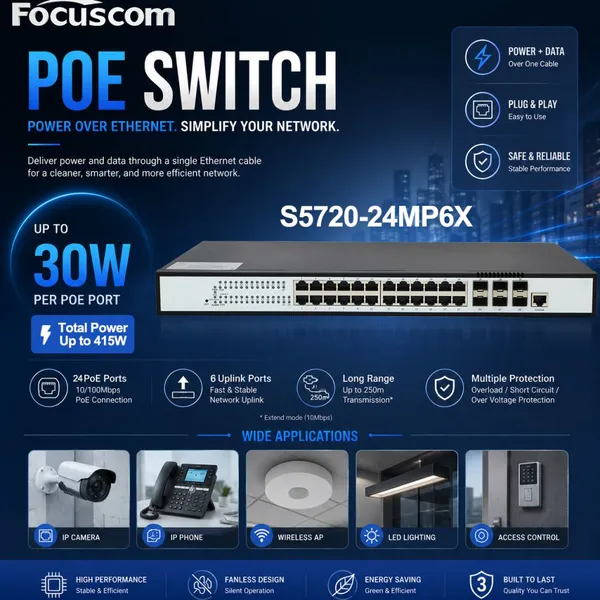 Read More

Contact Us
Recommended Products
-
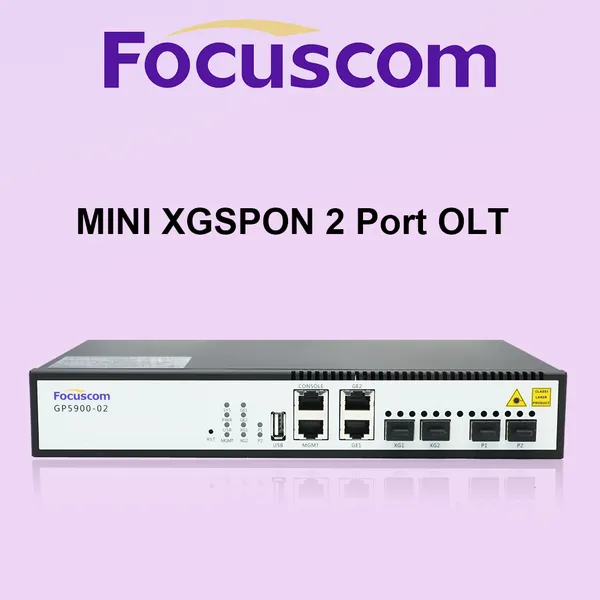
 Mini XGSPON OLT 2 Port Layer 3 Managed Optical Line Terminal With 10G SFP+ Uplink High-Speed FTTH Solution for Small ISPs XGPON OLT Focuscom GP5900-02NegotiableMOQ: 1 Unit
 -
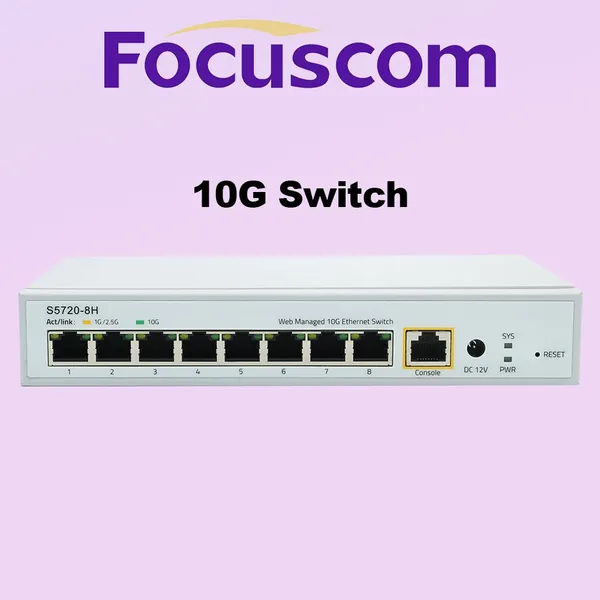
L3 Managed 10G Network Switch, 8-Port 10G Base-T RJ45 Ethernet Switch, High-Performance Enterprise Core/Aggregation Layer Switch Focuscom S5720-8HNegotiableMOQ: 1 Unit
-
L3 Managed PoE Switch 48-Port Gigabit Ethernet Network Switch With 4x10G SFP+ Uplinks High-Performance Enterprise Switch Focus S5710-48TP4SXNegotiableMOQ: 1 Unit
-
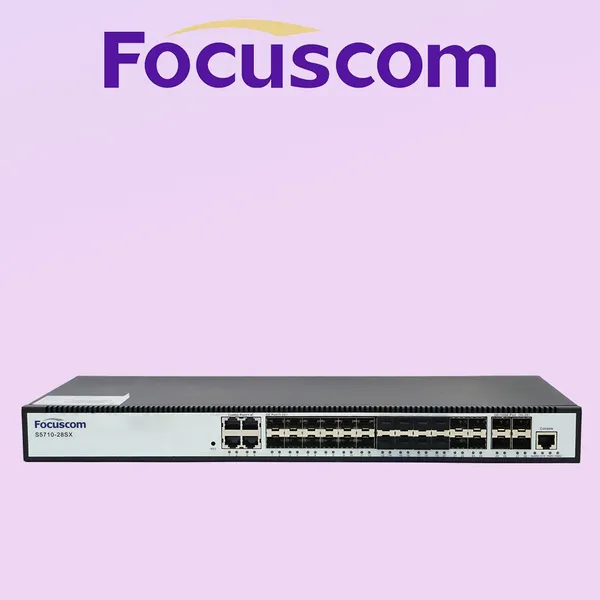
Gigabit L3 Managed Network Switch, 24-Port SFP & 4-Port 10G SFP+ Uplink, High-Performance Enterprise Ethernet Access Fiber Switch Focus S5710-28SXNegotiableMOQ: 1 Unit
-
L3 Managed Enterprise Switch, 24-Port Gigabit RJ45 With 4x10G SFP+ Uplinks, Layer 3 Access Ethernet Network Switch Focuscom S5710-28TXNegotiableMOQ: 1 Unit


-
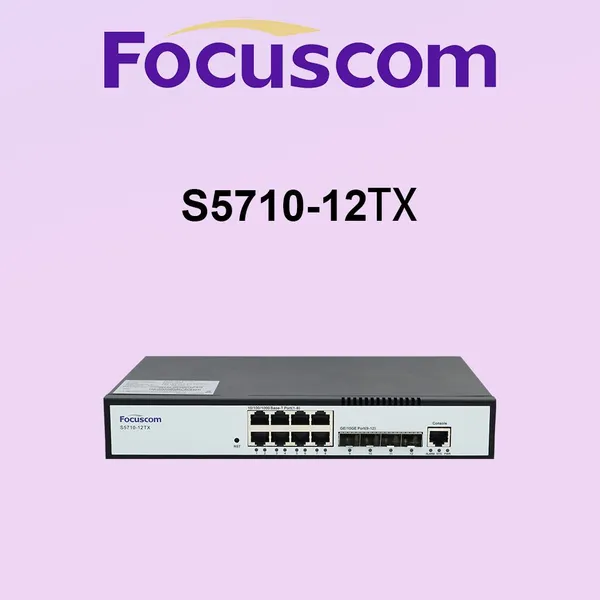
L3 Managed Switch 8-Port Gigabit Ethernet With 4x10G SFP+ Uplink High-Performance Enterprise Network Routing Switch Focuscom S5710-12TXNegotiableMOQ: 1 Unit
-
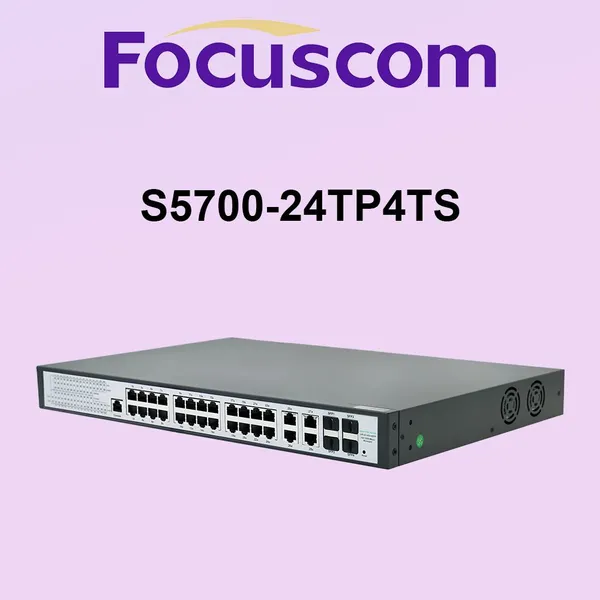
Managed PoE Switch 24 Port 1G RJ45 Port Enterprise Network Switch With 4 Combo SFP Ports POE Switch Focuscom S5700-24TP4SNegotiableMOQ: 1 Unit
-
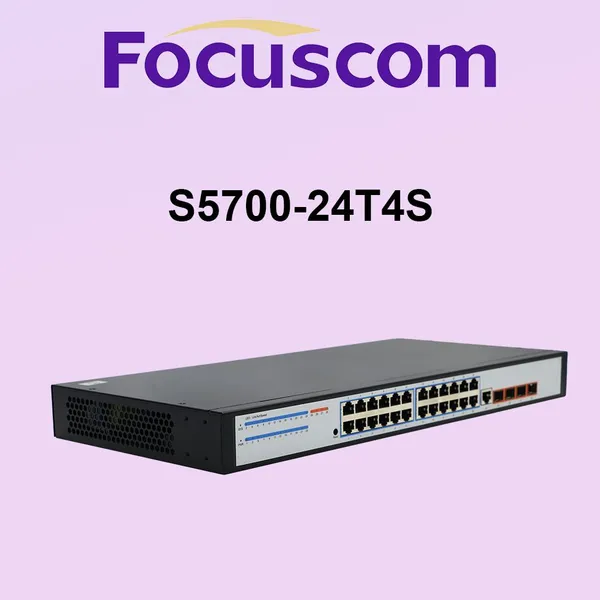
Managed L2 Gigabit Ethernet Switch, 24-Port 1G Base-T Access Switch With 4G SFP Uplinks Network Switch Focuscom S5700-24T4SNegotiableMOQ: 1 Unit
-
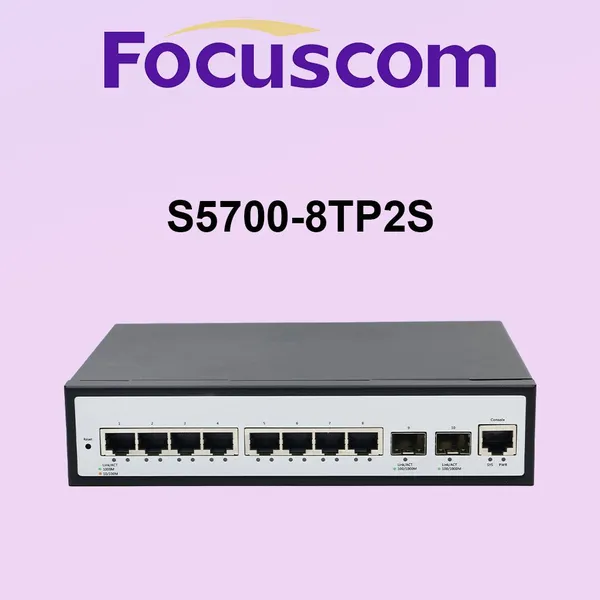
P0E L2 Managed Gigabit Ethernet PoE Switch, 8 Port 1G RJ45 With 2 Gig SFP Network Switch Focuscom S5700-8TP2SNegotiableMOQ: 1 Unit
-
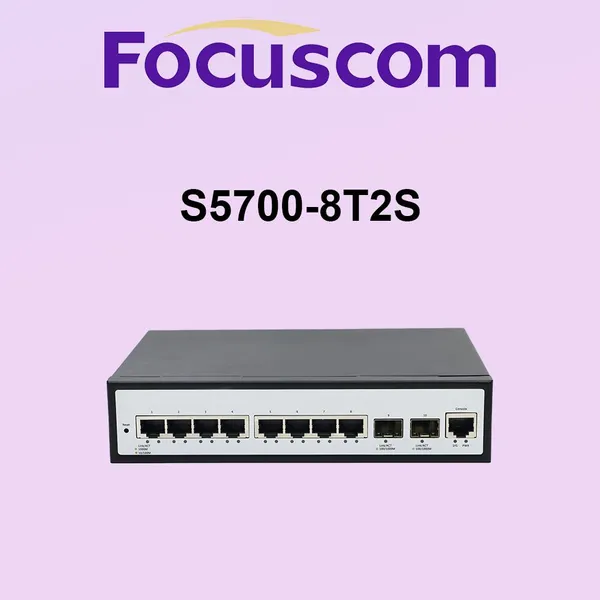
L2 Managed Gigabit Ethernet Switch, 8-Port 1G Base-T & 2-Port 1G SFP Uplink, High-Performance Enterprise Access Network Switch Focuscom S5700-8T2SNegotiableMOQ: 1 Unit
-
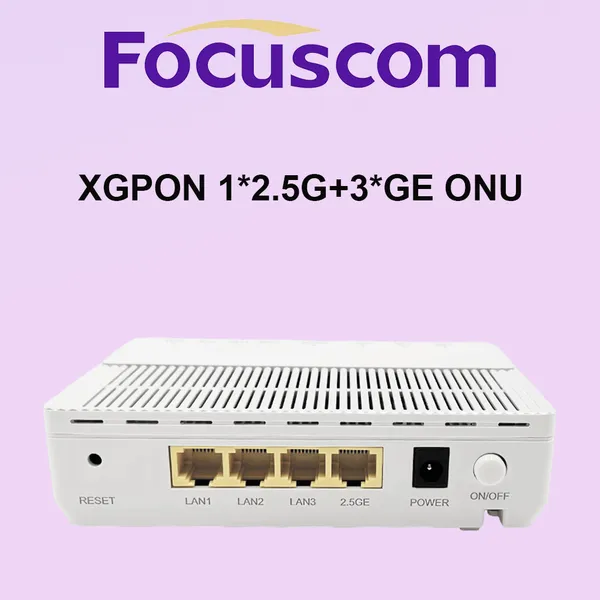
XGPON GPON ONU With 2.5G Ports Dual Mode High-Speed Optical Network Terminal for Next-Gen FTTH Business Solution XGPON ONU Focuscom FX3024NegotiableMOQ: 1 Unit
-
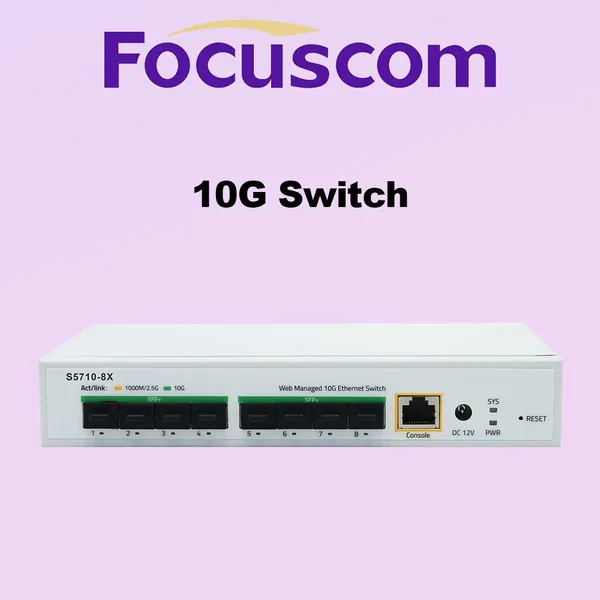
10G L3 Managed Fiber Switch, 8-Port 10G SFP+ High-Performance Stackable Enterprise Network Switch Focuscom S5720-8XNegotiableMOQ: 1 Unit
-
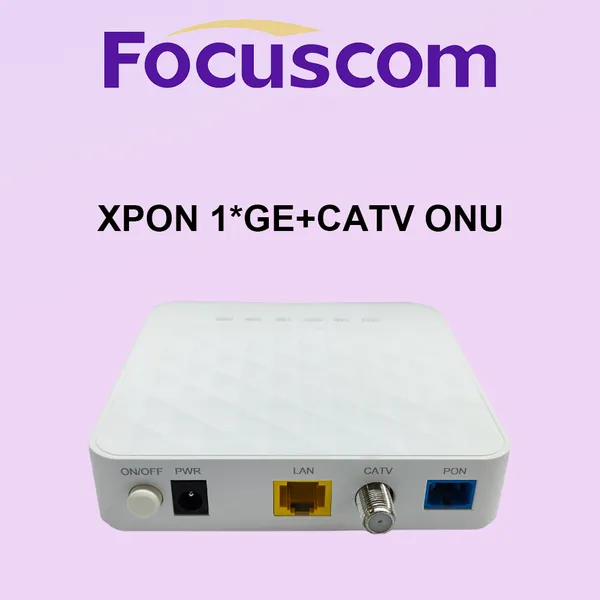
GPON ONU 1GE+CATV Single Port High-Speed Modem Dual Mode XPON EPON ONU for FTTH Solution and CATV System Focuscom FC2001-TNegotiableMOQ: 1 Unit
-
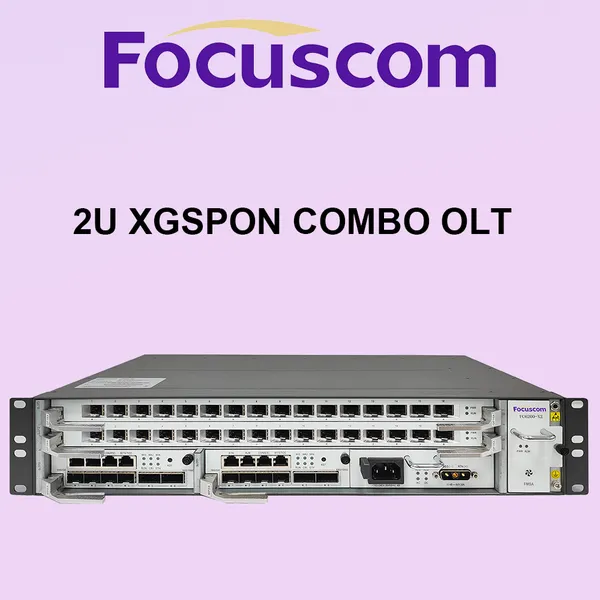
2U XGSPON Combo OLT Chassis With 32-Port Capacity Dual Main Control Boards and AC+DC Redundant Power Supply Modular XGPON OLT Focuscom FC6200-X2NegotiableMOQ: 1 Unit
-
16 Port XGSPON Combo OLT Layer 3 Managed High-Density Optical Line Terminal With 100G Uplink FTTH Solutions XGPON OLT Focuscom GP5810-16NegotiableMOQ: 1 Unit
-
XPON 1GE ONU Bridge Mode High Performance Mini ONT Compatible With Huawei ZTE OLT for FTTH Fiber Optic Network Solutions GPON ONU Focuscom FC2001NegotiableMOQ: 1 Unit
-
8 Port XGSPON Combo OLT 1U Rackmount Layer 3 Managed Terminal With 10G SFP+/100G Uplink for High-Speed FTTH ISP Solutions Focuscom GP5810-08NegotiableMOQ: 1 Unit
-
L3 Managed Network Switch, 24-Port 2.5G RJ45 With 6-Port 10G SFP+ Uplinks, Stackable Enterprise Access Layer Ethernet Networking Switch S5720-24M6XNegotiableMOQ: 1 Unit
-
Layer 3 Managed PoE Switch, 24-Port 2.5G Base-T and 6-Port 10G SFP+ Uplink, Enterprise Ethernet Network Switch Focuscom S5720-24MP6XNegotiableMOQ: 1 Unit
-
L3 Managed Gigabit Ethernet Switch, 48-Port 10/100/1000Base-T With 4x10G SFP+ Uplinks, High-Performance Network Switch Focuscom S5710-48T4SXNegotiableMOQ: 1 Unit